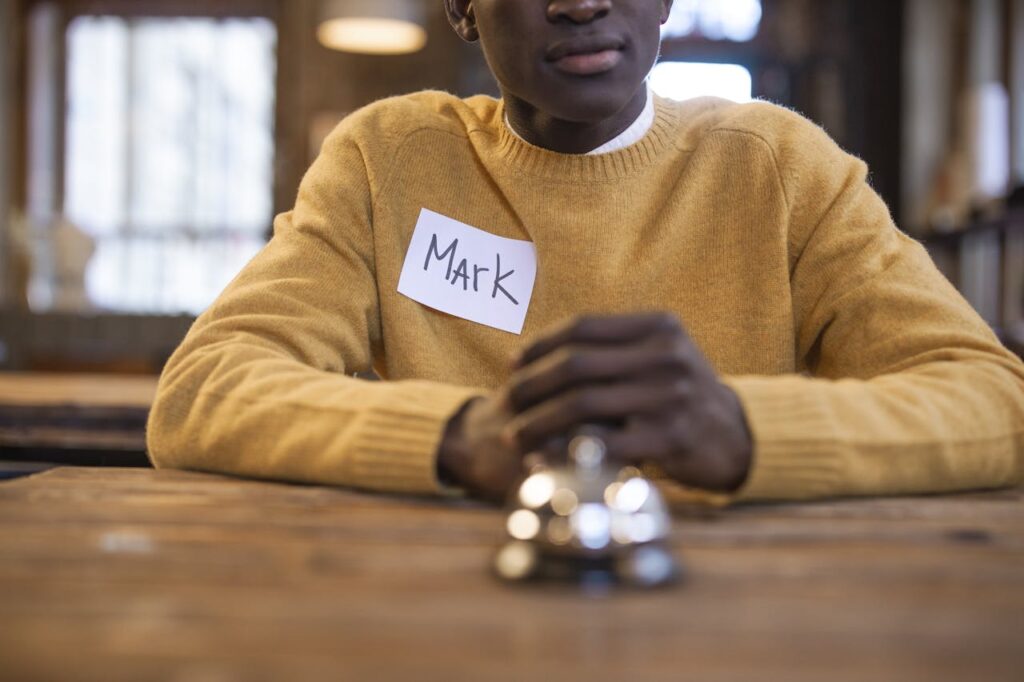
These are the symptoms of a collective loss of relational capacity.
Recipe for a planetary-level antisocial storm:
– Bring to a simmer a full cup of hyper-individualistic values
– Wash away community spaces.
– Mix up with personal devices fine-tuned to show you exactly what you want to hear/feel
– Spice up with a global pandemic.
Even if you’ve been the luckiest person in the world, blessed with a strong social network, you interact every day with people who are more disconnected than ever before – and that’s bound to impact you…
Maybe you have noticed some signs of reduced relational capacity.
Here are some examples:
– You don’t pick up unexpected calls from friends. You avoid speaking to the person next to you in the check-out line. You can’t remember why you put yourself through those awkward situations in the past.
– You snap at people even if you don’t mean to. Your patience has grown thin. You want to do better, but it feels like a reaction you can’t control anymore.
– If someone asks you for a favour, you feel irritated. You haven’t asked for help in a long time (maybe years?) You’re not sure who would be there for you if you needed something, so you think it’s better to save any requests for a time of dire need.
– When uncomfortable emotions show up in a connection, you try to find a quick way to change those feelings. You may avoid some people or end relationships that feel like ‘a lot of work’.
– You spend far more time on your phone than you’d like to admit to yourself. Distraction is not just rest anymore, it has become dissociation.
It’s not that you don’t want to connect with people, it’s that it takes too much of your energy and capacity (and the rewards seem minimal).
– Meeting with friends and loved ones is not as joyful as it used to be. Conversations are more pessimistic, people seem burnout, you’re restless. You just want to go back to the peace and quiet of being on your own – except…
– … the time alone is only enjoyable for so long – then it becomes heavy. The dark nights drag on… Something is missing and you’re not sure what it is, so how could you search for it?
Can you feel it? The struggle between opposite emotions and needs? The call to be part of a community that you cannot stand anymore?
It really isn’t just you, it’s a collective shift. Things that used to be a normal part of our social nature have become hard, a stretch of our capacity.
So – where do we go from here?
First, things are always happening. Individuals and organisations continue to create groups and meetups that allow people to come together.
This is real proof of our instinct to connect and help others.
Another important factor is the creation and recovery of Third Spaces. These spaces place social connection at the centre: they’re inviting, comfortable, informal, playful (we’re talking community centres, libraries, parks, social clubs, businesses designed for social interactions, etc.)
Then there are people like me, who believe that we need one more layer.
We need spaces where we actively reflect on the building blocks of social connection and *practise* them with others. Social skills gyms, relational playgrounds…
In these spaces you can practise increasing your nervous system tolerance and capacity for connection. This is not only for difficult interactions – we have also lost collective capacity for shared joy and hope, and we desperately need it.
Developing and maintaining this capacity individually is not sustainable long-term, because your capacity and tolerance do not depend only on yourself.
As a social species we *co-regulate*, and this means that your capacity will change depending on the capacity the people around you have.
In my next post I’ll share what practising relational skills (with others) will bring to your life.
Ready to find people who will help you access, increase and maintain that capacity?
Photo by Safar Safarov on Unsplash